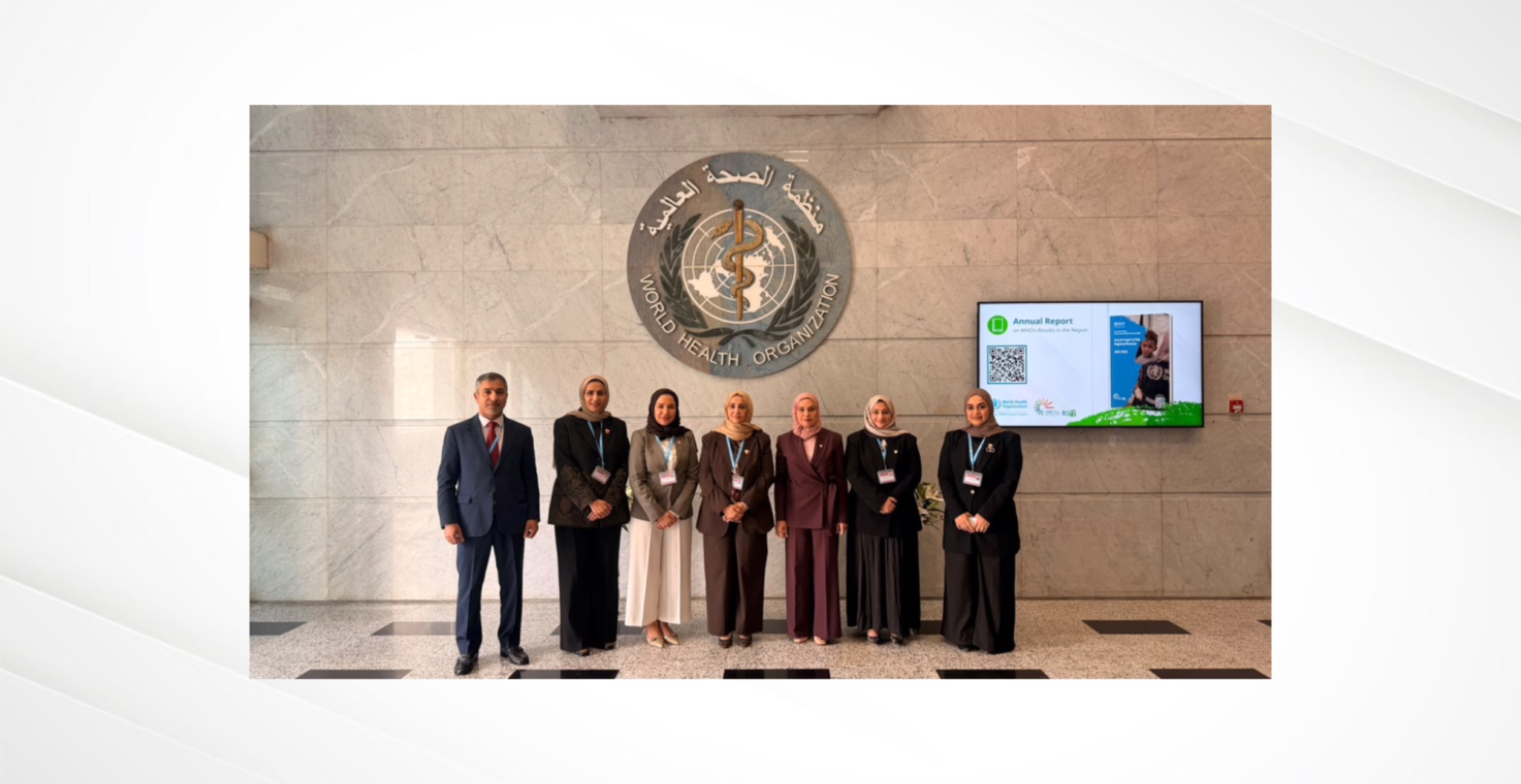
Minister of Health Heads Bahrain’s Delegation to the 73rd Session of the WHO Regional Committee for the Eastern Mediterranean
13/10/2026
Her Excellency Dr. Jaleela bint Al-Sayed Jawad Hassan, Minister of Health, affirmed the Kingdom of Bahrain’s commitment to further strengthening cooperation with the World Health Organization (WHO) and its Member States, and to exchanging expertise and successful practices to enhance the resilience of health systems and support the achievement of universal health coverage and health-related Sustainable Development Goals.
Her Excellency made these remarks while heading Bahrain’s delegation to the 73rd Session of the WHO Regional Committee for the Eastern Mediterranean, held in Cairo, the Arab Republic of Egypt, from 13 to 15 October 2026. The delegation included Her Excellency Ambassador Fawzia bint Abdullah Zainal, Bahrain’s Ambassador to Egypt and Permanent Representative to the League of Arab States.
The session addressed several regional health priorities, including polio eradication and strengthening immunization programmes. Bahrain presented its experience in maintaining polio-free status for more than three decades through sustained investment in immunization programmes, epidemiological and environmental surveillance, maintaining high vaccination coverage rates, and strengthening public confidence in vaccines.
Discussions also covered efforts to combat communicable diseases, advance universal health coverage, and improve the quality of healthcare services. Progress reports were reviewed on improving access to medicines and vaccines, strengthening the health workforce, and accelerating the response to antimicrobial resistance.
The session also addressed the advancement of digital health and the development and digitalization of health information systems, with Bahrain presenting its national efforts in this area. In discussions on the One Health approach, the Kingdom highlighted the role of its National Committee in coordinating the efforts of relevant sectors and strengthening integration among them to support effective responses to shared health challenges.
Regional efforts to strengthen mental health services and psychosocial support during emergencies were also reviewed, alongside preparedness for and response to health emergencies in accordance with the International Health Regulations (2005). The session further examined progress in implementing the regional strategy and action plan for tobacco control, including efforts to address emerging tobacco and nicotine products.
Comments
Currently there are no comments.
Login to add comment