As Part of Government Efforts to Enhance Service Quality and Re-engineer Processes, the Ministry of Health Launches the Virtual Genomics Clinic Service
27/10/2026
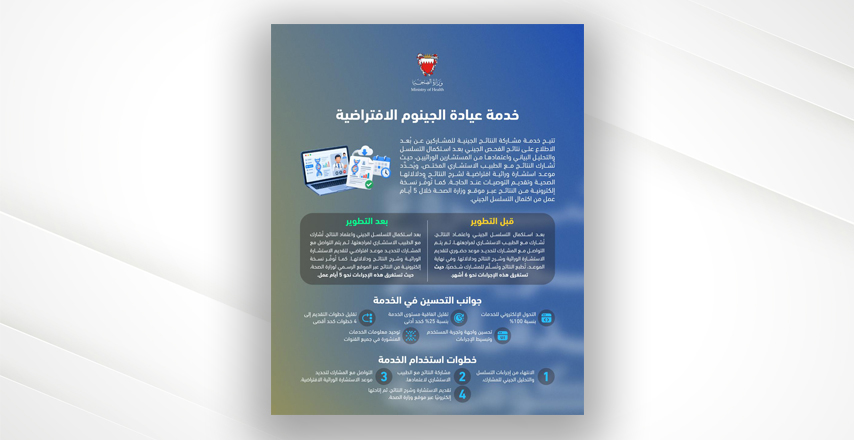
As part of ongoing government efforts to improve service quality and re-engineer procedures, the Ministry of Health has enhanced its Genomics Consultation Clinic service, which is dedicated to communicating genetic test results, by launching a new Virtual Genomics Clinic service. The service provides remote medical consultations to facilitate access to specialized genetic counselling in accordance with the highest modern medical standards.
Under the enhanced service, the number of steps has been reduced to four, and the service completion time has been shortened from six months to five days. Improvements also include a 50% reduction in required documents, a reduction of at least 25% in the service-level agreement timeframe, limiting the application process to a maximum of four steps, improving existing systems, and standardizing service information published across all channels.
In this regard, Dr. Lulwa Rashid Shuwaiter, Undersecretary of the Ministry of Health, affirmed that the Virtual Genomics Clinic provides remote genetic consultations for patients, participants in the National Genome Project, and families with a history of hereditary diseases or affected family members, without requiring in-person attendance. The service includes case assessments, explanations of genetic test results, pharmacogenomics consultations, and medical counselling.
She added that the virtual clinic for communicating National Genome Project results represents a key pillar in maximizing the health and strategic impact of the project. It helps translate genetic data into actionable health knowledge, identify potential health risks, and guide beneficiaries towards appropriate preventive interventions and medical follow-up. The service also improves access to care, enables consultations without in-person visits, optimizes the use of healthcare resources, and strengthens prevention and early detection, supporting the Kingdom of Bahrain’s efforts towards personalized medicine and proactive, sustainable healthcare.
It is worth noting that, as part of ongoing government efforts to develop and re-engineer public services, more than 1,300 government services have been documented, translated, and published, with 800 services undergoing development and process re-engineering across various government sectors. These efforts were informed by suggestions and feedback submitted through the national Tawasul Suggestions and Complaints System, investor feedback, and mystery shopper reports evaluating government services. They have also included the introduction of service guidelines and service-level agreements, contributing to more efficient procedures, improved service quality, enhanced beneficiary experiences, and the advancement of digital government transformation.
Comments
Currently there are no comments.
Login to add comment